Best Time to Visit Uganda
Uganda's two dry seasons (Dec-Feb, Jun-Aug), the $600 low-season gorilla permit window, why Kidepo's climate differs, and how to pick the right month.
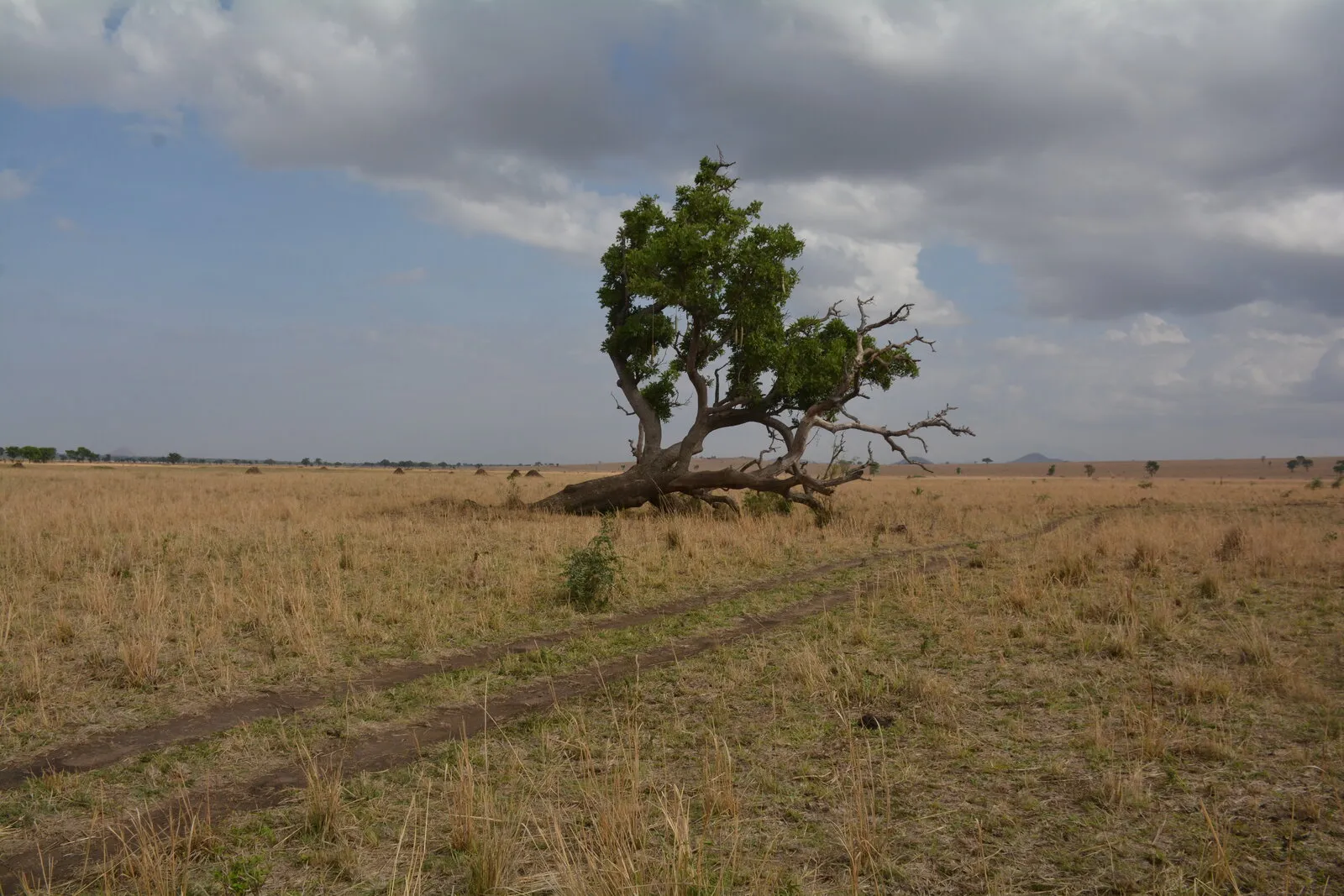
Photo: Vincent Mugaba, CC BY-SA 4.0, Wikimedia Commons
Why go
There isn’t a single right month to visit Uganda — there’s a right month for what you’re prioritizing, and deciding that early makes the rest of the trip easier to plan. Most of the country runs on a broadly bimodal climate: two dry stretches, December through February and June through August, separated by two wetter periods, March through May and September through November. That pattern is behind almost every “best time to visit” answer you’ll find for Uganda’s classic circuit — Bwindi, Mgahinga, Queen Elizabeth, Lake Bunyonyi, the Rwenzori — for a straightforward reason: dry months mean firmer forest trails, easier hiking, clearer visibility for wildlife and photography, and the best odds a gorilla trek doesn’t turn into a mud crawl.
But “dry is best” isn’t the whole story, and treating it as gospel can cost you money and the solitude you might actually want. The same two dry windows are also when Uganda is busiest and priciest: gorilla permits for the June–September and December–February peaks commonly sell out 6 months or more ahead, because daily supply is hard-capped at 8 trekkers per habituated family across a fixed roster of groups. The wetter shoulder months trade some trail comfort for real advantages — thinner crowds, easier permit availability, and, as of a 26 February 2026 Uganda Wildlife Authority tariff memo, a genuine price break. Gorilla tracking permits drop from the standard $800 (foreign non-resident) to $600 specifically in April, May, and November — a 25% discount for accepting worse footing in exchange. None of that makes the dry season the wrong choice. It just means Uganda genuinely lets you optimize for conditions, cost, or crowds, and the right answer depends on which of those three you actually care about most.
Getting there
The dry/wet framework above describes most of Uganda well, but it doesn’t describe all of it, and that matters the moment your itinerary reaches into the north. Uganda’s southwest — the gorilla parks, Bwindi and Mgahinga, plus Lake Bunyonyi and the Kigezi highlands — sits above 1,300 meters and runs the bimodal pattern in its clearest form. Bwindi itself gets an estimated 1,400–1,900mm of rain a year, peaking in March–April and September–November, and the altitude keeps conditions genuinely cool, with recorded lows around 7°C and highs rarely above 27°C. Pack for temperate hiking weather here, not tropical heat.
Head north toward Kidepo Valley National Park and the wider Karamoja region, and the climate stops behaving like the rest of the country. This is Uganda’s semi-arid corner, and instead of two wet/two dry cycles, it runs closer to one long rainy stretch and one long dry one — though even the sources describing it don’t fully agree on the exact boundary. General Uganda climate summaries put the north’s rains at roughly March through November with a December–February dry season; a Kidepo-specific breakdown instead places the wet season at April–August and the dry season September through March, with January and February bringing the harshest heat, sometimes past 40°C, and droughts common enough to be considered routine. What both descriptions agree on is the point that actually matters for planning: Kidepo’s hottest, driest, dustiest stretch lands squarely in December through February — exactly the window when the rest of Uganda is enjoying its most popular tourist season. If Kidepo is on your route, don’t assume the southwest’s dry-season logic applies the same way up there; check Kidepo’s own conditions on their own terms rather than importing an assumption from Bwindi.
That regional split has a routing consequence worth building into your itinerary, not just your packing list. A single Uganda trip that covers both the southwest gorilla parks and the far north is, climatically, closer to two different trips stitched together than one continuous season — the “best month” for one leg isn’t automatically the best month for the other, and a date chosen purely around Bwindi’s calendar can land you in Kidepo during its harshest heat, or vice versa.
When to go
Zoom in to the month-by-month decisions and three things are worth locking in early. First, gorilla permits: the standard rate is $800 for foreign non-residents (also $700 foreign resident, $500 Rest-of-Africa, and UGX 300,000 for East African Community citizens) year-round, at both Bwindi and Mgahinga — except in April, May, and November, when the 2026 low-season tariff drops the foreign non-resident rate to $600 ($500 foreign resident). That discount is genuinely tied to those three specific months, not a general shoulder-season markdown, and once booked it’s non-reschedulable. Choosing the dry season instead buys you the best trail conditions and the highest odds of clear photography, but it also means the earliest planning horizon of any Uganda travel decision: permits for the June–September and December–February peaks sell out 6 months or more ahead, and Uganda’s booking mechanics tightened further in 2026 — UWA suspended its old 7-day unpaid reservation window on 1 March, so permits are now only secured against full payment at the time of booking, with no more holding a date for a week while you decide. Whichever season you pick, the lesson is the same: decide early, because a supply-capped permit system doesn’t reward waiting.
Second, lodging follows a similar shoulder-season logic, and it’s not just a theory — Bwindi Backpackers Lodge, right at Bwindi Impenetrable Forest, is one directly-verified example, running a stated 20% discount on full-board accommodation specifically for April, May, and November 2026, the same three months as the discounted permits. That’s not a universal rule across every property — rates vary lodge to lodge, and this is one real data point rather than a guarantee — but it’s a genuine, current instance of the pattern operators across the region tend to follow: prices soften when demand does.
Third, wildlife viewing has its own seasonal logic, mostly independent of gorilla trekking. In Uganda’s savanna parks, dry months thin out vegetation and pull animals toward permanent water sources, which is what actually makes them easier to spot on a game drive — a straightforward, well-documented pattern rather than a marketing claim. Wetter months trade that concentration for greener scenery and, per general Uganda seasonal travel guidance, are commonly associated with more newborn animals across the region’s parks, alongside noticeably thinner crowds on both game drives and forest trails. Gorilla sightings themselves don’t follow this pattern the same way — UWA tracks the same habituated families daily, year-round, so trekking success stays broadly consistent whatever the month.
Put together: if guaranteed dry trails and the clearest photography matter most and you don’t mind booking 6+ months out at peak rates, aim for June–August or December–February. If saving money, trekking with fewer people around you, and tolerating mud sounds like the better trade, April, May, and November now come with an official price break to match. Either choice works — Uganda’s gorillas, forests, and parks are there in every month. The one genuine trap is assuming one region’s calendar tells you what another region, especially Kidepo, is actually doing.
The numbers
| What you pay | Cost |
|---|---|
| Gorilla Tracking permit, standard/high season — valid at Bwindi (BINP) or Mgahinga (MGNP) (FNR / FR / ROA / EAC) UWA Conservation Tariff, July 2024–June 2026 cycle, unchanged by the 26 Feb 2026 tariff memo through at least 1 Jan 2027. This is the year-round rate everywhere outside the three low-season months below | $800 / $700 / $500 / UGX 300,000 |
| Gorilla Tracking permit, low season — April, May & November only (FNR / FR) Introduced by the 26 Feb 2026 UWA memo, effective on issue. Non-reschedulable once booked — the discount applies only to those three specific months, not a general shoulder-season markdown | $600 / $500 |
| Gorilla Habituation Experience — unaffected by the low-season discount Same 26 Feb 2026 memo confirms the low-season cut applies only to standard Gorilla Tracking permits. Habituation stays at one price year-round, in every month, including April/May/November | $1,500 (rising to $1,800 on 1 Jan 2027) |
| Non-gorilla park entrance fees — Queen Elizabeth, Murchison Falls, Kidepo, Rwenzori, and others Unlike gorilla permits, UWA's Conservation Tariff sets these by park category, not by month. A Category B park day fee runs $35 in April exactly as it does in August | Flat year-round — no seasonal pricing tier |
| Bwindi Backpackers Lodge — full-board accommodation, low season One directly-verified real example, not a site-wide guarantee — individual lodge and operator discounts vary and should be checked directly rather than assumed | 20% off the standard rate, April, May & November 2026 |
Common questions
What's actually the single best month to visit Uganda?
There isn't one — it depends what you're optimizing for. If firm trails, the clearest photography, and the least risk of a rained-out day matter most, June through August or December through February are Uganda's two dry windows and the safest bet. If saving money and avoiding crowds matter more, April, May, and November now carry a genuine, UWA-confirmed $600 gorilla permit rate (down from $800) alongside quieter trails and at least some lodges discounting rooms to match. Both are legitimate answers; the mistake is assuming the dry season is objectively "best" rather than best for a specific priority.
Is the new $600 low-season gorilla permit actually worth it?
For a lot of travelers, yes. It's a real 25% discount off the $800 standard foreign non-resident rate, introduced by Uganda Wildlife Authority's 26 February 2026 tariff memo, and it comes with genuinely thinner crowds and easier permit availability than the peak months, when permits for June–September and December–February commonly sell out 6 months or more ahead. The tradeoff is real too: April, May, and November sit inside Uganda's wetter stretches, so expect muddier, sometimes longer treks, and remember the discounted permit is explicitly non-reschedulable once booked — if the forecast turns bad the week of your trek, you're not getting a different date. Worth it if you can tolerate mud for a meaningfully lower price and fewer people; not worth it if you're trekking with someone whose fitness or footing makes wet-season terrain a real risk.
Does Uganda's "dry season" mean it won't rain at all?
No — treat it as "drier and more predictable," not rain-free. Even in the driest stretches, brief afternoon showers happen, and Uganda's climate is trending more variable overall; recent analysis flags rainfall becoming less predictable in length year to year, particularly in the east and northeast. Pack rain gear regardless of which month you're traveling — dry season in Uganda means better odds, not guarantees.
Why does Kidepo's best time to visit look different from the rest of Uganda?
Because its climate genuinely runs on a different cycle. Most of Uganda is bimodal — two wet seasons, two dry seasons — but Kidepo and the wider Karamoja region in the far north are semi-arid, and sources describe the exact boundary a little differently: broad climate summaries put the north's rains at roughly March through November with a December–February dry season, while a Kidepo-specific breakdown places the wet season at April–August and the dry season September through March, with January and February bringing the harshest heat, sometimes past 40°C, and droughts common. The two descriptions don't agree on exact month boundaries, but they agree on the point that matters for planning: Kidepo's hottest, driest, dustiest stretch lands in December through February — precisely the window when the rest of Uganda is at its most popular. Don't import the southwest's dry-season logic onto a Kidepo itinerary without checking Kidepo's own conditions separately.
Do lodges actually discount rates in the rainy season, or is that just a marketing claim?
It happens, but it's lodge-by-lodge, not universal. Bwindi Backpackers Lodge, based right at Bwindi Impenetrable Forest, is a directly-verified example: a stated 20% discount on full-board accommodation for April, May, and November 2026 — the same three months as the discounted gorilla permits. That's one real, current data point, not a blanket industry rule; other properties set their own low-season pricing independently, and it's worth asking directly rather than assuming a discount is automatic anywhere you book.
Does the wet season affect wildlife viewing outside the gorilla parks too?
Yes, though in the opposite direction from what many first-time visitors expect. In Uganda's savanna parks, dry months thin out vegetation and pull animals toward permanent water sources, which is what actually makes them easier to spot on a game drive — a straightforward, well-documented pattern rather than a marketing line. Wetter months trade that concentration for greener scenery, and general Uganda travel guidance associates the rains with more newborn animals across the region's parks, alongside noticeably thinner crowds. Gorilla sightings themselves are consistent year-round regardless of season, since UWA tracks the same habituated families daily — it's forest wildlife elsewhere, and savanna game viewing specifically, where the seasonal pattern shows up most.
- Uganda Wildlife Authority — Conservation Tariff, July 2024–June 2026
- Uganda Wildlife Authority — Introduction of Low Season Gorilla and Chimpanzee Permit Rates and Revised Tariff Structure (26 Feb 2026 memo)
- SafariBookings — Uganda Weather & Climate
- SafariBookings — Best Time To Visit Uganda (Month by Month)
- SafariBookings — Kidepo Valley Weather & Climate
- Wikipedia — Climate of Uganda
- Wikipedia — Bwindi Impenetrable National Park (rainfall, altitude, temperature)
- Bwindi Backpackers Lodge — Special Low Season Offer, April/May/November 2026
Seen on TikTok & YouTube
Real clips from travelers on the ground, verified before they're linked below.