10-Day Uganda Itinerary
A realistic 10-day Uganda route — Murchison Falls, Kibale, Queen Elizabeth, Bwindi, Lake Bunyonyi — with honest drive times, permits, and per-day costs.
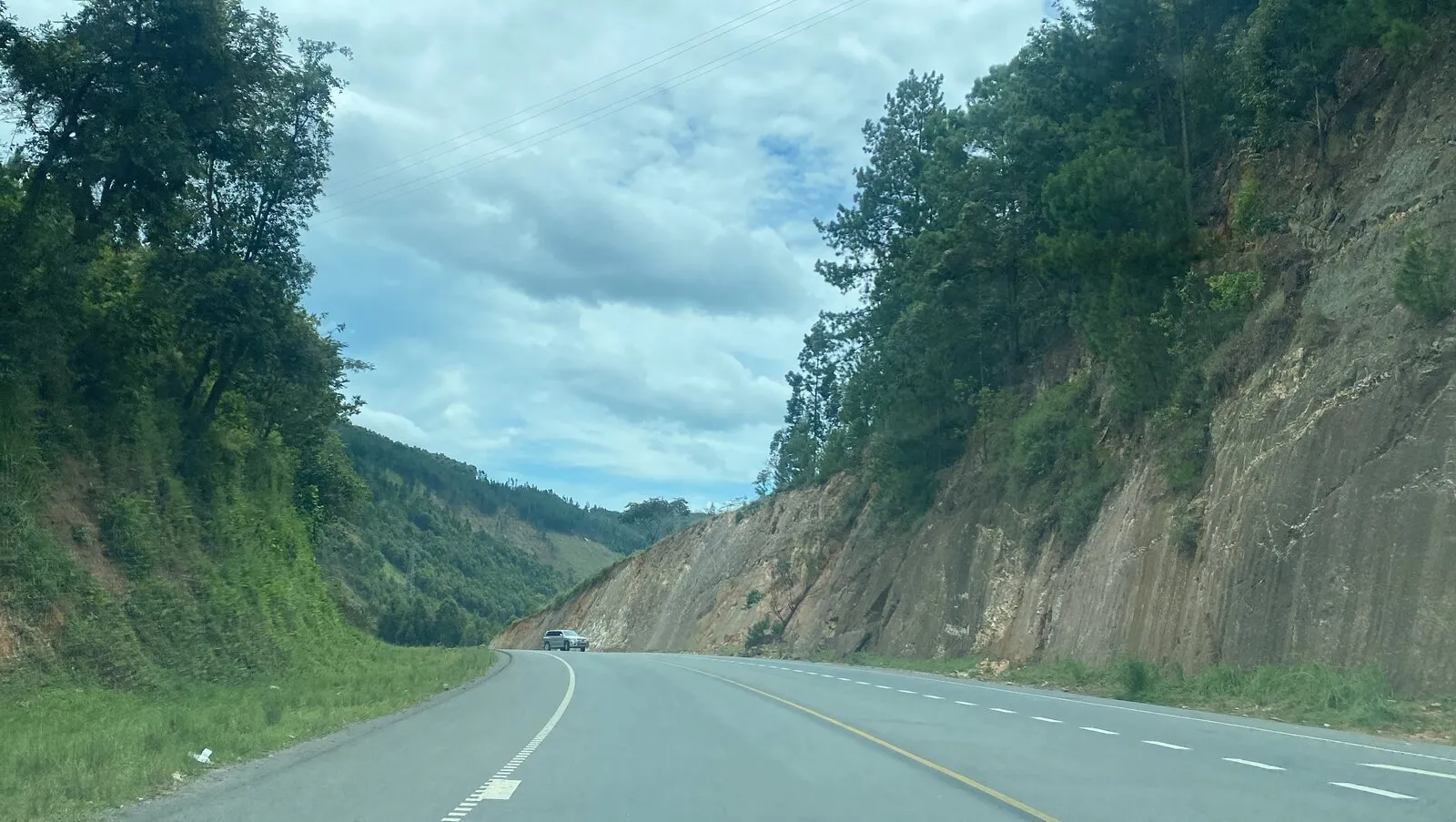
Photo: BalukuBrian, CC BY-SA 4.0, Wikimedia Commons
Why go
Ten days is the itinerary length where Uganda actually clicks into place. Any shorter and you’re choosing between the gorillas and the savanna game drives; any longer and you’re padding a genuinely tight, efficient route with days that don’t add much. Ten days — done as Entebbe, Murchison Falls, Kibale, Queen Elizabeth, Bwindi, and Lake Bunyonyi before looping back — is close to the country’s full headline circuit in a single trip, and it’s not a route this page invented: it’s essentially the standard product several real Uganda operators sell under exactly that name, four parks plus Bunyonyi in ten days.
What makes it work is the shape of the country itself. Uganda’s major parks sit in a rough arc across the west and southwest, close enough together that a single road trip can string them together, but far enough apart that none of the drives between them are short. That’s the tradeoff this page won’t paper over: this itinerary earns its wildlife variety — tree-climbing lions, chimpanzees, mountain gorillas, hippos and elephants along the Nile, all inside ten days — with several genuinely long travel days in between, one of which (Murchison to Kibale) commonly runs 6–7 hours and sometimes longer. Plenty of glossy itinerary pages gloss over this. This one states it upfront, because knowing which days are transfer days and which are activity days is the actual difference between a trip that feels well-paced and one that feels rushed.
The route also isn’t rigid. The brief version of this trip swaps Murchison for Kibale, or vice versa, rather than doing both — a genuinely reasonable choice if ten days feels ambitious or if the Murchison–Kibale transfer day is the one you’d rather not do. Either way, the backbone stays the same: start in the north or the west, work south through Queen Elizabeth toward Bwindi, decompress at Lake Bunyonyi, and loop back to Kampala or Entebbe. What follows lays out both the full five-stop version and where the honest compromises are if you’re working with less time.
Getting there
Day 1 — Entebbe to Murchison Falls. Budget the whole day for this one: it’s roughly 305km and, depending on which source you check, anywhere from 4 to 6 hours of driving, with most operators quoting 5–6 hours including a stop. Many itineraries build in a stop at Ziwa Rhino Sanctuary en route for rhino tracking and lunch, which adds a couple of hours but breaks up the drive. Overnight near the park, at Paraa or one of the lodges around the Pakuba area.
Day 2 — Murchison Falls National Park. A full park day: morning game drive on the delta/northern side of the Nile for elephants, giraffes, lions, and buffalo, then an afternoon Nile boat cruise up to the base of the falls, past hippos, crocodiles, and riverside birdlife. Same lodge, second night.
Day 3 — Murchison Falls to Kibale. The hardest transfer of the trip. Distance and time estimates genuinely vary by source — one distance-calculator site puts it at 5 hours 10 minutes, others cite 7 to 8+ hours, and tour operators themselves commonly quote 6–7 hours through Hoima and Fort Portal, past tea plantations and crater lakes. Whatever the exact number turns out to be on the day, this is not a leg to schedule an afternoon activity around — treat it as a full travel day and be glad to arrive. Overnight around Kibale or Fort Portal.
Day 4 — Kibale Forest National Park. Morning chimpanzee tracking (permit and rules below), then an afternoon guided walk through the Bigodi Wetland Sanctuary for birdlife and a change of pace from primate tracking. Same base, second night.
Day 5 — Kibale to Queen Elizabeth National Park. The easiest transfer on the whole route — sources put the direct Fort Portal–QENP road at around 120km and as little as 1¼ hours, though most itineraries stretch it to 2.5–4 hours with stops at the crater lakes around Kabarole en route. A short, genuinely pleasant drive after the previous day’s long one. Overnight in the Mweya or Kasenyi area.
Day 6 — Queen Elizabeth National Park. Morning game drive on the Kasenyi plains — lions, elephants, buffalo, hyenas — then an afternoon Kazinga Channel boat cruise between Lake Edward and Lake George, one of the most reliable wildlife-viewing activities in the country for hippos and water birds. Same lodge, second night.
Day 7 — Queen Elizabeth to Bwindi. The other genuinely long day: roughly 292km and 5–6 hours, routed through the park’s Ishasha sector — known for tree-climbing lions, worth keeping your eyes up during the drive — then on to Kihihi and into Bwindi. Overnight in whichever Bwindi sector your gorilla permit is assigned to; that assignment, not “Bwindi” generically, determines exactly where you’re sleeping.
Day 8 — Bwindi Impenetrable National Park. Gorilla trekking day: a ranger briefing at headquarters, then a trek that can run anywhere from under an hour to most of a day depending on where your assigned family has moved, followed by the regulated one hour with the gorillas themselves. Same lodge, second night — most trekkers are glad of a rest afternoon after this one.
Day 9 — Bwindi to Lake Bunyonyi. How long this takes depends entirely on which Bwindi sector you trekked from. From the southern sectors, Rushaga or Nkuringo, it’s a genuinely short hop — roughly 2.5–3.5 hours. From Buhoma in the north, it’s considerably longer, commonly cited at 5–6 hours via Kabale, since Buhoma sits on the opposite side of the park from the lake. Know your sector before you assume this is a light travel day. Overnight at the lake — canoeing, swimming, and a proper rest after the trek.
Day 10 — Lake Bunyonyi to Kampala/Entebbe. The final leg, roughly 410–450km and 7–9 hours by road via Mbarara, with a common stop at the Equator crossing near Kayabwe for photos. If that sounds like a long way to end a trip, it is — the road alternative is flying out via Kisoro or Kihihi airstrip on Aerolink, roughly 1 hour 10–15 minutes back to Entebbe, which several higher-budget versions of this itinerary use specifically to avoid this exact drive.
Ten days, one long backbone route, and — being honest about it — three or four of those days are mostly about the miles between the wildlife rather than the wildlife itself. That’s not a flaw in the planning; it’s what covering this much of Uganda in this little time actually costs.
When to go
The seasonal calendar for this route is the same one that governs the rest of Uganda’s parks: two dry windows, December–February and June–August, when the unpaved and partly-paved stretches — Murchison–Kibale and the run into Bwindi especially — are at their firmest and least likely to slow you down, against two wetter stretches, roughly March–May and September–November, when the same roads get muddier and drives can run toward the long end of every range quoted above.
What’s specific to this itinerary is the overlap between road conditions and Aerolink’s own schedule. April, May, and November are exactly the three months UWA now prices at a discount for both gorilla ($600 instead of $800, FNR) and chimpanzee ($200 instead of $250, FNR) permits — genuinely attractive if your dates are flexible. But those same three months are when Aerolink suspends its Entebbe–Murchison flight and the Murchison–Kasese/Kihihi inter-park hop entirely, per its own 2026 schedule. If Murchison is on your route and your dates fall in that window, budget for the full road transfer on both the way in and the way out — the flight shortcut simply isn’t running, whatever a booking site might otherwise suggest.
One more honest seasonal note: the wettest months don’t just slow the road days down, they can lengthen the gorilla and chimp treks themselves, since forest trails get slower going underfoot. None of that makes the shoulder months a bad choice — quieter parks and genuine permit savings are a real trade — but pair that decision with a bit more schedule buffer around Days 3, 7, and 9 specifically, since those are the legs where road conditions matter most.
The numbers
| What you pay | Cost |
|---|---|
| Gorilla Tracking permit, Bwindi — standard/high season (FNR / FR / ROA / EAC) UWA Conservation Tariff, July 2024–June 2026 cycle. Same figure as the dedicated Gorilla Permits guide — the single biggest line item on this route | $800 / $700 / $500 / UGX 300,000 |
| Chimpanzee Tracking permit, Kibale — standard/high season (FNR / FR / EAC) UWA Conservation Tariff. Current cycle publishes no separate Rest-of-Africa rate for chimp tracking, unlike gorilla permits. Drops to $200/$150 (FNR/FR) in April, May and November under the 26 Feb 2026 UWA low-season memo — the same three months as the discounted gorilla rate | $250 / $200 / UGX 180,000 |
| Murchison Falls park entrance, Category A+, per day (FNR / FR / ROA / EAC) UWA Conservation Tariff. Murchison sits in its own higher pricing tier — it is NOT the same $40 Category A rate as Bwindi, Queen Elizabeth, or Kibale, despite that being a common assumption. Bundled into most guided park activities, not usually a separate line you pay yourself | $45 / $35 / $30 / UGX 25,000 |
| Queen Elizabeth NP & Kibale NP park entrance, Category A, per day (FNR / FR / ROA / EAC) UWA Conservation Tariff — identical line to Bwindi's Category A entrance fee. Kibale's chimp permit already includes this park's entrance fee; Queen Elizabeth's does not, so budget it separately for QENP days | $40 / $30 / $25 / UGX 20,000 |
| Kazinga Channel launch trip, Queen Elizabeth NP (FNR / FR / EAC) UWA Conservation Tariff — the boat cruise between Lake Edward and Lake George, the standard afternoon activity on a QENP day | $30 / $25 / UGX 30,000 |
| Aerolink domestic flight, one-way (Entebbe–Pakuba/Kasese/Kihihi/Kisoro) No flat published fare in Aerolink's own 2026 timetable. The Entebbe–Murchison (Pakuba) flight and the inter-park Murchison–Kasese/Kihihi hop do not operate at all in March, April, May or November — exactly the low-season window when the discounted gorilla and chimp permits apply, so travelers chasing that discount should plan to drive those legs, not fly | Priced per route and season — quote from Aerolink or your operator |
| 10-day trip total, per person, land costs only — computed estimate Not a quoted package price — this is 10 days at SafariBookings' published average per-day rates ($300/$425/$700, see the Uganda Safari Cost guide) plus the $800 gorilla and $250 chimp permits from this table. Actual land packages vary by operator, vehicle, and lodge choice; treat this as a planning floor, not a quote | ≈$3,800–$4,050 budget / ≈$5,050–$5,300 mid-range / ≈$7,800–$8,050 luxury |
Common questions
Is 10 days really enough for Murchison, Kibale, Queen Elizabeth, AND Bwindi?
It's tight but genuinely doable, and it's the exact route several real tour operators sell as a standard 10-day product — Prayer Valley Tours, Nigrita Expeditions, and Henry Tours & Safaris all publish itineraries covering this same four-park (plus Bunyonyi) combination in 10 days, each following essentially the same day-by-day shape used below. What makes it work is that the itinerary isn't really 10 days of driving — it's roughly five full driving days connecting five multi-night stops, with wildlife activities filling the days in between. It's a genuinely full trip with several long transfer days, not a relaxed one; if that pace sounds like too much, the honest fix is dropping either Murchison or Kibale rather than trying to rush all five stops into fewer nights each.
Which drive is the worst one, and how bad is it really?
Murchison to Kibale, without much competition. It's roughly 230–360km depending on the exact route and stops, and sources genuinely disagree on the time — anywhere from about 5 hours to over 8, with 6–7 hours the most commonly quoted range across operator itineraries. It runs through Hoima and Fort Portal on a mix of road conditions and is usually the longest single travel day of the whole trip. Queen Elizabeth to Bwindi via the Ishasha sector is the other genuine haul, at roughly 292km and 5–6 hours. Neither is unsafe or unusual for Uganda — this is simply what the geography costs — but budget the whole day for each, not a few hours, and don't schedule an activity on either side of them.
Should I fly instead of driving any of these legs?
For some of them, yes, if the budget stretches. Aerolink runs daily scheduled flights connecting Entebbe with Pakuba (Murchison), Kasese (serving both Queen Elizabeth and Kibale), and Kihihi or Kisoro (Bwindi) — flight times run roughly 1 hour to just over 1 hour, versus 4–9 hours by road for the equivalent legs. There's also a direct inter-park hop from Murchison straight to Kasese or Kihihi in about 1 hour 10 minutes, which can cut the worst driving day out of this itinerary entirely if the schedule lines up. The one real catch, verified against Aerolink's own 2026 timetable: the Entebbe–Murchison flight and that inter-park hop don't run at all in March, April, May, or November — which happens to be exactly when UWA's discounted low-season gorilla and chimp permits apply. Chasing the cheaper permit and the flight shortcut at the same time isn't possible; pick one priority for those months.
Do I need both a gorilla permit and a chimp permit for this route?
Only if you want both animals, but most travelers doing all five stops do buy both — Kibale is genuinely the best chimp-tracking destination on the route, and Bwindi is the reason most people build this trip in the first place. Together that's $800 (gorilla, FNR) plus $250 (chimp, FNR) per person on top of every other cost on this page, which is why the computed per-person total above runs several thousand dollars even before lodging and transport. If budget is the binding constraint, chimp tracking is the easier one to drop or substitute — Queen Elizabeth's own Kyambura Gorge offers a cheaper chimp-tracking permit at $100 (FNR), a fraction of Kibale's $250, though sighting odds there are generally considered less reliable than Kibale's larger, better-habituated groups.
What if I only have 7–8 days — what should I cut?
Drop one savanna/forest park rather than shortening the gorilla trek or the long drives — Bwindi and the Murchison-to-Kibale-to-QENP core don't compress well, since the driving days are fixed regardless of how long you stay at each stop. The cleanest cut — and the one this itinerary follows — is choosing Murchison OR Kibale rather than both: that removes the worst single drive day (Murchison–Kibale) from the trip entirely and still leaves a coherent route — Entebbe to your chosen park, Queen Elizabeth, Bwindi, Bunyonyi, back to Kampala or Entebbe — in something closer to 7–8 days without turning every day into a transfer.
How does the per-day cost band summary here relate to the dedicated cost guide?
This page's computed total is deliberately built from the same source figures as the companion Uganda Safari Cost guide — SafariBookings' published $300/$425/$700 per-person daily averages for budget/mid-range/luxury, plus the UWA permit fees from this same tariff document. This page just multiplies those daily bands by 10 days and adds the two permits relevant to this specific route; the cost guide breaks down where that daily figure actually goes — vehicle hire, fuel, driver allowance, park fees, tipping — in far more detail than fits here.
- Uganda Wildlife Authority — Conservation Tariff, July 2024–June 2026
- Uganda Wildlife Authority — Introduction of Low Season Gorilla and Chimpanzee Permit Rates and Revised Tariff Structure (26 Feb 2026 memo)
- AeroLink Uganda — Flight Schedule, valid January to December 2026
- SafariBookings — Uganda Safari Costs
- Prayer Valley Tours — 10-Day Safari: Murchison Falls, Kibale, Queen Elizabeth, Bwindi and Lake Bunyonyi
- Nigrita Expeditions — 10 Days Uganda Safari: Murchison Falls, Kibale, Queen Elizabeth and Bwindi Impenetrable National Park
- Henry Tours and Safaris — 10-Day Murchison Falls, Kibale, Queen Elizabeth, Bwindi NP
Seen on TikTok & YouTube
Real clips from travelers on the ground, verified before they're linked below.